The Midnight Market
Christina Rossetti's goblin market as a party where every guest keeps a stall: scrip at the gate, haggling and swaps, caramel apples that go out cold and sliced, a goblin fruit platter on ice, two pots of mulled cider, and unspent money that turns to hawthorn leaves at cockcrow.
Decor Checklist
- innotree LED Fairy String Lights, 6 Pack Essential
Warm white strands draped along the front edge of every stall table, on a steady setting
Shop on Amazon → - YAKii LED Vintage Flame Lanterns (2 Pack) Nice to have
One at the gate and one on the Fortune Stall, hung high
Shop on Amazon → - Printed scrip, a small cloth bag per guest and a hand bell Essential
The purses handed out at the gate, and the crier's bell for opening, the auction and cockcrow
- DSTELIN Mini Chalkboards with Easels, 10 Pack Essential
Price boards for each stall, written in scrip
Shop on Amazon → - Printed stall signs on cardstock Essential
Six tent cards: Fruit Seller, Plant Stall, Curiosities, Baker, Potion Stall, Fortune Stall
- Best Choice Products Seagrass Baskets, Set of 4 Nice to have
Stall baskets for wares, fruit and the leftovers box
Shop on Amazon → - Kslong Small Kraft Paper Bags, 50 Pack Essential
For spiced nuts and anything a guest carries away from a stall
Shop on Amazon → - Woodpeckers 1-1/2 inch Wood Discs, 100 Pack Optional
Blank tokens for the Curiosities stall or a painted copper purse
Shop on Amazon → - Clisil Gold Lurex Yarn, 860 Yards Nice to have
The golden curls: loops tied at the wrist, never a real lock of hair
Shop on Amazon → - Animal half masks (cat, owl) Optional
For the host and anyone who comes as one of the goblin merchants
Shop on Amazon →
Menu
Playlist
Listen on Hallowmix →
Costumes
Host
- The crier: a long coat, a hand bell and a purse of scrip to hand out at the gate
- The cat-faced merchant, in a cat half mask with a basket on one arm
Guests
- One of Rossetti's animal merchants: rat, snail, wombat, ratel or parrot, as an animal, with an apron and a tray
- A stallholder in an apron and shawl, with their wares in a basket
- A fairy-fair cattle dealer in a flat cap, slapping hands on every bargain
- Laura or Lizzie in a plain long dress, with a golden curl of yarn at the wrist
Party Timeline
- Week before: Spiced nuts made and bagged. Hand pies assembled and frozen. Scrip printed and cut.
- Morning: Caramel apples dipped and into the fridge. Fruit washed and chilled.
- 7:00 PM: The gate opens. Every guest gets a purse of scrip and a stall shift.
- 7:15 PM: The crier rings the bell and reads the opening of Goblin Market.
- 7:30 PM: The stalls open, in 30-minute shifts.
- 8:30 PM: Hand pies out of the oven; the first caramel apples out of the fridge, sliced.
- 9:00 PM: Swap hour at the Curiosities and the Plant Stall.
- 9:45 PM: The closing auction, for scrip only.
- 10:30 PM: Cockcrow. Unspent scrip turns to hawthorn leaves; the last lines of the poem as a toast.
- 11:00 PM: The goblins vanish.
Shopping List
- Invitations, scrip and stall signs (free printables), 110 lb cardstock, A7 kraft envelopes, small cloth or paper purses, a hand bell
- Warm white LED fairy strands, two LED lanterns, mini chalkboards, baskets, kraft bags, gold yarn
- Folding tables and dark tablecloths for six stalls (borrow them)
- 12 small tart apples, two 14-oz bags of soft caramels, 1/2 cup heavy cream, 4 cups crushed candy bars, craft sticks
- 4 sheets puff pastry, 2 large Granny Smith apples, 2 eggs, sugar, cinnamon; for ATK's caramel sauce, sugar, light corn syrup, 1 cup heavy cream, vanilla and salt (or a store-bought caramel sauce, label checked)
- 2 lb unsalted raw nuts, 2 egg whites, 1 1/3 cups sugar, cinnamon, ginger, coriander
- Platter fruit from the poem: apples, pears, grapes, pomegranates, figs, dates, oranges, lemons, melon, cranberries, blackberries; ice
- 1 1/2 gallons pasteurized apple cider, oranges, a lemon, ginger, allspice, cloves, peppercorns, cinnamon sticks, coriander seeds, brown sugar
- 16 oz brandy (a 750 ml bottle covers it), pomegranate juice, sparkling water
The Premise
Every guest keeps a stall. At the gate the crier hands each one a purse of scrip, and for the rest of the night the living room is a market: fruit on ice, a baker, a potion stall with two pots, a plant swap, a table of curiosities and a fortune teller. Prices are chalked in coppers, silver pennies and golden curls, and everyone haggles. At cockcrow, 10:30 in this house, whatever scrip is left in anyone’s purse turns to hawthorn leaves.
It comes from Christina Rossetti’s Goblin Market, where goblin merchants come down the glen crying “Come buy, come buy.” The poem, the pictures and the folklore on this page come from the poem’s text on Project Gutenberg, the Victoria and Albert Museum, the Metropolitan Museum of Art, the Irish National Folklore Collection’s schools’ stories and JSTOR Daily. The food safety comes from the FDA and two peer-reviewed studies on caramel apples; the recipes are America’s Test Kitchen’s.
This isn’t the Midnight Carnival. There, the host runs the games and hands out prizes. Here the guests are the merchants, and nothing is won: it’s all trade and barter, and the only prize is getting rid of your scrip before the bell. It’s a party for sixteen. The invitation is a market bill, the scrip comes twelve notes to a sheet, and the stall signs fold into tent cards.
Goblin Market, 1862
The poem
Goblin Market and Other Poems came out in 1862. The Victoria and Albert Museum’s record of its copy gives the imprint as Cambridge and London, Macmillan & Co., 1862, and credits the pictures to Dante Rossetti, the poet’s brother (V&A). The Project Gutenberg text we quote is Oxford University Press’s 1913 World’s Classics edition, which says the book “was first published in 1862” (Project Gutenberg). It opens:
Morning and evening
Maids heard the goblins cry:
‘Come buy our orchard fruits,
Come buy, come buy:
Apples and quinces,
Lemons and oranges,
Plump unpecked cherries,
Melons and raspberries,
Bloom-down-cheeked peaches,
Swart-headed mulberries,
Wild free-born cranberries,
Crab-apples, dewberries,
Pine-apples, blackberries,
Apricots, strawberries;--
All ripe together
In summer weather,--
Morns that pass by,
Fair eves that fly;
Come buy, come buy:
Our grapes fresh from the vine,
Pomegranates full and fine,
Dates and sharp bullaces,
Rare pears and greengages,
Damsons and bilberries,
Taste them and try:
Currants and gooseberries,
Bright-fire-like barberries,
Figs to fill your mouth,
Citrons from the South,
Sweet to tongue and sound to eye;
Come buy, come buy.’
That’s the crier’s reading at 7:15. Note what it says about the time. The goblins cry at “Morning and evening”, and every fruit is ripe “In summer weather”. There’s no midnight in the poem. The name of this party is ours.
The poem is a fairy tale with a dark middle. The sister who buys from the goblins sickens, and the other goes back to face them for her. We quote only the opening, the lines about money, the goblins vanishing and the ending, and none of the rest goes on a sign or a card. Read the whole thing before you read any of it aloud.
The money, and the golden curl
The goblins are merchants, and the poem is about paying. When Laura says she can’t buy, the lines give the party its currency:
‘Good folk, I have no coin;
To take were to purloin:
I have no copper in my purse,
I have no silver either,
And all my gold is on the furze
That shakes in windy weather
Above the rusty heather.’
‘You have much gold upon your head,’
They answered all together:
‘Buy from us with a golden curl.’
Later, her sister Lizzie “put a silver penny in her purse” before she goes down to the brook. Copper, a silver penny and a golden curl are the three notes on the scrip.
The pictures
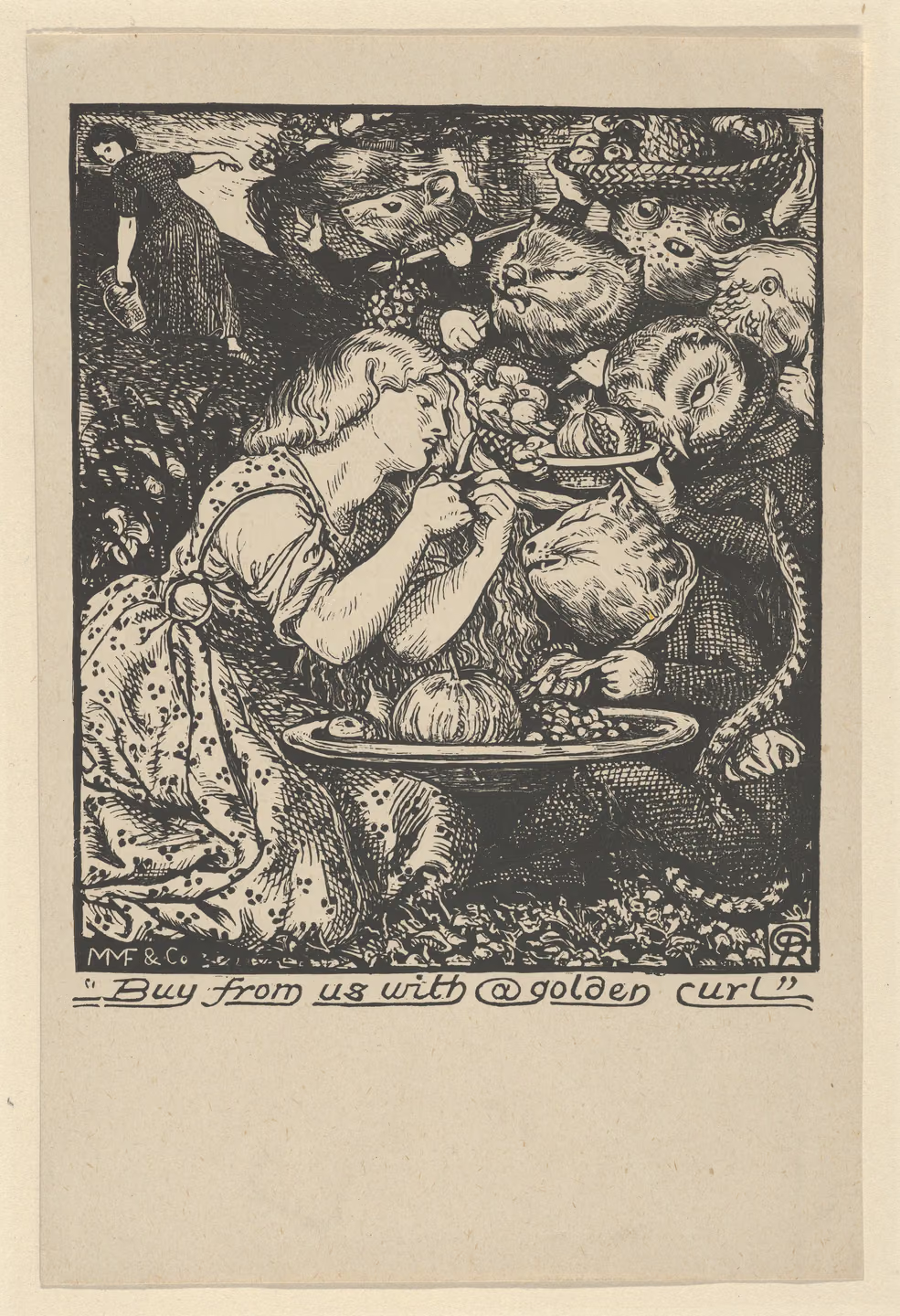
The first edition had two wood-engraved designs by Dante Gabriel Rossetti, a frontispiece and a title page. The goblins in the frontispiece are animals: a cat, an owl, a rat and more, holding out their plates. That’s how the poem describes them, too:
One had a cat’s face,
One whisked a tail,
One tramped at a rat’s pace,
One crawled like a snail,
One like a wombat prowled obtuse and furry,
One like a ratel tumbled hurry skurry.
The museums don’t agree on who cut the frontispiece block:
- The V&A’s copy of the book says the title page and frontispiece were “designed by D. G. Rossetti and cut by W. J. Linton and Morris, Marshall, Faulkner and Co. respectively” (V&A).
- The V&A’s proof sheet of the two designs quotes a note by William Rossetti, the poet’s other brother: “The frontispiece was cut (his first woodcut) by the celebrated Wm Morris; the Title-page by Linton” (V&A). The museum dates that proof 1865.
- The Met’s impression of the frontispiece lists “Drawn on the block by Charles Joseph Faulkner” among its makers, and names Morris, Marshall, Faulkner and Co. as publisher (The Met).
Morris’s firm appears in all three records, but not in the same role: the V&A names it as the cutter, William Rossetti names William Morris himself, and the Met lists the firm as publisher, with Faulkner drawing on the block. We credit it “after Dante Gabriel Rossetti,” the way the Met does.
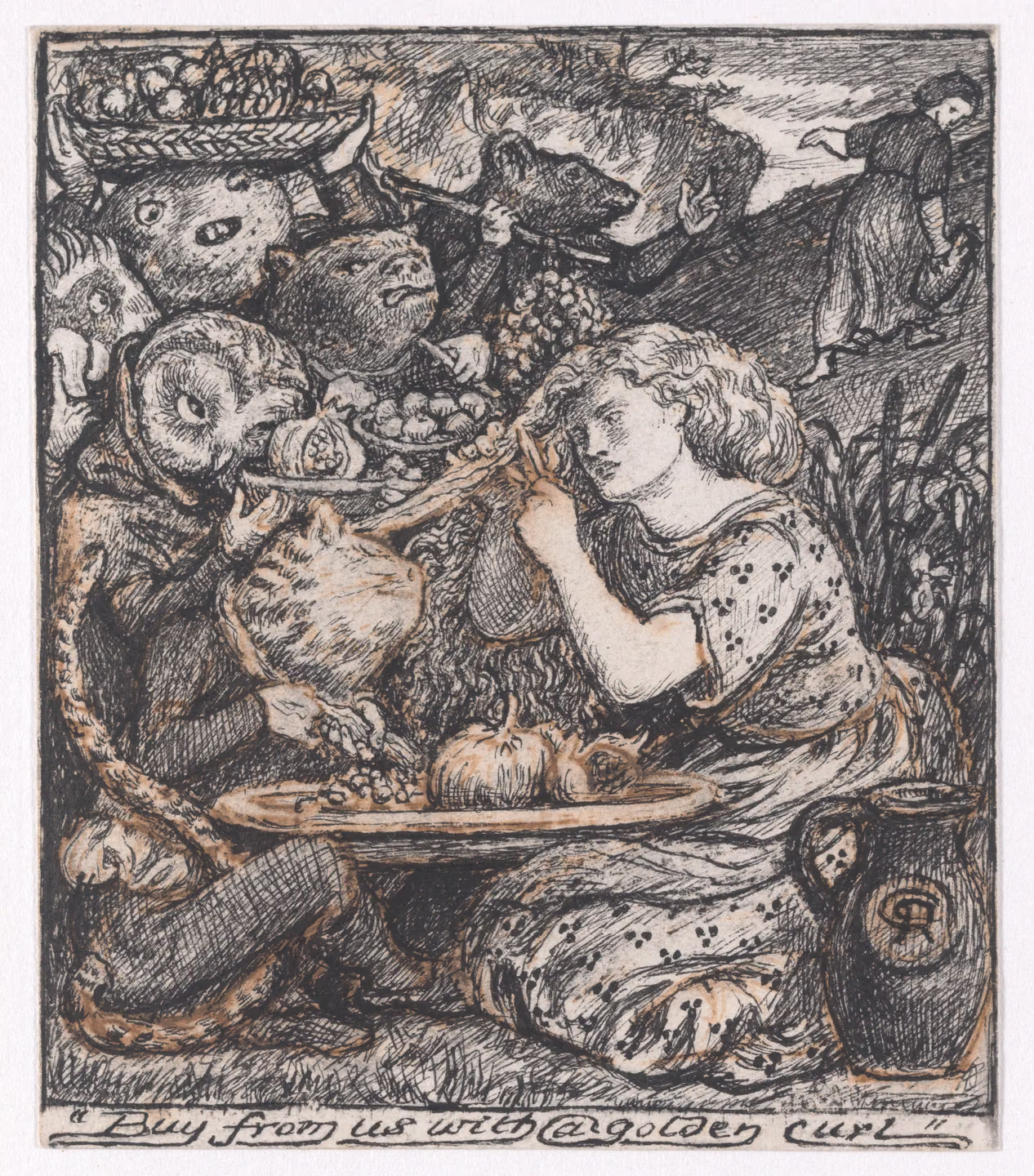
The Met also holds Rossetti’s own pen drawing for the design, which it titles “Buy from us with a golden curl, for ‘The Goblin Market’” (The Met). That “The” is the museum’s; the poem and the 1862 book call it Goblin Market.
The Fairy Fairs
The goblin fruit market is Rossetti’s invention. We looked for a folk tradition behind it in the sources we trust and didn’t find one, so this party doesn’t claim one. Irish folklore does have fairy markets, though, and they’re a different thing: fairs for cattle and horses.
The Schools’ Collection at Dúchas is, in its own words, “a collection of folklore compiled by schoolchildren in Ireland in the 1930s” (Dúchas). Three of its fairy fairs:
- Druim Mór, Co. Sligo. A card player named Micky Culkin comes on a fairy fair on his way home. As he came nearer “he could hear the buying and selling quite distinctly”, and someone in the crowd shouts “Here comes Micky Culkin, let him pass” as he walks through. Farther along the road he plays cards all night with a stranger and wins a stack of gold. At home, “he put his hand in his pocket to show the gold to his wife and what should he find but a pocketful of hawthorn leaves.” He gives up cards: “He had at last learned his lesson and you can bet his wife was delighted” (collected by Seosamh Ó Catháin from John Cuffe; Dúchas).
- Ballincurry, Co. Sligo. “One night the fairies held a fair in Ballincurry. Some fairies were buying and more fairies were selling. They had cows and calves and horses and pigs at it. They were shouting through the village.” And at the end, “When the cock crew in the morning the people were watching them going away” (collected by Joseph B. Flannery from Mary Feely; Dúchas).
- Clonmellon, Co. Westmeath. An old man walking home sees “a great number of men buying and selling cattle and horses”, and “There were clapping of hands and clinching of bargains.” Two of them set him at the field gate to take the toll, and “Before long his pockets were bulging with money.” In the morning he found “instead of money, a pocketful of horse-manure” (collected by Pádraig Gillick; Dúchas).
That’s where the scrip’s rule comes from: fairy money is good until cockcrow and then it’s leaves. The Ballincurry story also has a violent turn in the middle, which we left out.
The word “fairy” itself is younger than people think. JSTOR Daily, summarizing the historian Ronald Hutton, puts it this way: “Before the late medieval period, Hutton writes, there were no ‘fairies’ in Britain. Instead, there were elves.” It adds that “Around the fourteenth century, folk and literary traditions concerning elves, demons, and other creatures coalesced into a unified fairy kingdom” (JSTOR Daily).
Setting the Stalls
The layout
Six stalls around the edge of the living room and dining room, each a folding table with a dark cloth, a basket, a price board and its tent card. Put the gate at the front door with the crier’s table and the bell. Keep the middle of the room open, because the market is people walking between tables.
- The Fruit Seller: the goblin fruit platter, on ice
- The Baker: the caramel apples, the hand pies and guests’ own bakes
- The Potion Stall: the two cider pots and the pomegranate spritzer, each labelled
- The Plant Stall: cuttings in water and bare-root divisions
- The Curiosities: the swap table, bring one thing and take one
- The Fortune Stall: a reader in a corner, run the way our Fortune Teller’s Parlor does it
The light
Keep it warm and low, and all of it LED. There’s cloth on every table and a crowd in costume, so there’s no open flame, no candle and no incense anywhere in this market (our rule). A strand of fairy lights along the front edge of each table does most of the work.

innotree LED Fairy String Lights, 6 Pack
Six 10-foot warm white strands on 2 AA batteries each, one button for on, timer and off, and a 6-hours-on timer. One strand per stall table, with the battery box tucked behind the basket.
Two lanterns mark the gate and the Fortune Stall. These run on 4 AA batteries each, and the listing claims that in extreme weather “the lamp should be placed indoors to prevent glass from breaking” (YAKii sells through Amazon, and we found no maker site with a manual). This party is indoors anyway. The listing describes a “flickering dancing flame” and doesn’t list a steady setting, so our rule is to hang them above eye level and read our section on flicker and photosensitivity before you put one on a table.

YAKii LED Vintage Flame Lanterns (2 Pack)
Black metal lanterns with a frosted glass shade and a 20-LED flame effect, about 10.5 inches tall. One at the gate, one hung over the Fortune Stall.
A little low fog at the gate is enough. Our fog machine guide covers the settings, and fog and smoke alarms covers the part that matters indoors.
Stall kit
Every stall gets a price board. Mini chalkboards stand up on their own and wipe clean when the prices change mid-haggle.

DSTELIN Mini Chalkboards with Easel Stand, 10 Pack
Ten 4 by 3 inch chalkboards on fold-down stands. Six for the stalls, one for the gate, and three spares for the auction.
Wares go in baskets, and anything a guest carries away goes in a kraft bag.
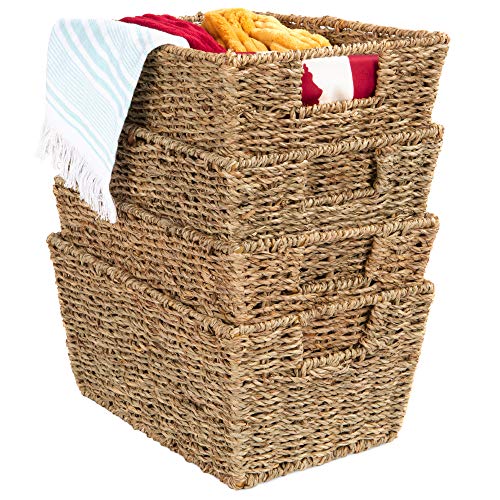
Best Choice Products Seagrass Storage Baskets, Set of 4
Four handwoven seagrass baskets with side handles, 12.2 by 8.7 by 6.3 inches. Big enough for a stall's wares; one ends the night as the leftovers box.

Kslong Small Kraft Paper Bags, 50 Pack
Square-bottomed 1 lb bags, 3.5 by 2.2 by 6.7 inches, which the listing says are food grade for dry food. The spiced nuts go in these, a handful each.
The Scrip
Every guest gets the same purse at the gate: one sheet of Midnight Market Scrip, which is four coppers, four silver pennies and four golden curls. Our rules:
- Prices are in words. “Two coppers,” “a silver penny and a curl.” Stall keepers chalk them up and change them whenever they like.
- Haggling is expected, and barter counts. A song, a secret or a trade from your own stall is as good as scrip if the keeper says so.
- No real money anywhere. Nothing at this party is for sale for cash, and nothing is cashed in at the end.
- The golden curl is yarn. Laura “clipped a precious golden lock”; your guests don’t. A curl is a loop of gold yarn, and the Golden Curl barber at the gate ties them on wrists. No scissors near anyone’s hair.
The scrip is play money made to look nothing like money. The Bureau of Engraving and Printing’s page on currency images sets the conditions for illustrations of U.S. currency, and quotes the law against any “business or professional card, notice, placard, circular, handbill, or advertisement in the likeness or similitude of any obligation or security of the United States” (BEP). Party scrip isn’t an illustration of a banknote, and we kept it well clear of looking like one: no numbers, no dollar signs, no portraits or seals, and not banknote-shaped.

Clisil Gold Lurex Yarn, 860 Yards
A 3 mm polyester metallic yarn, 100 grams. Wind a curl around two fingers, tie it off and it's a golden curl; one skein makes far more than a party can spend.
If you’d rather have coins, blank wood discs make coppers with a dab of copper craft paint on one side. Paint a word, never a number.

Woodpeckers Wood Discs, 1-1/2 x 1/8 inch, 100 Pack
Unfinished birch discs, 1 1/2 inches across and 1/8 inch thick, pre-sanded. Paint takes well; they also work as swap tokens at the Curiosities.
Running the Market
7:00 PM: The gate
Send the invitation three weeks out and ask everyone to bring wares: a bake, a cutting, a curiosity, a skill. At the gate each guest gets a purse and a stall shift. Six stalls in 30-minute shifts from 7:30 to 9:00 gives eighteen keeper slots, enough for sixteen guests and the host, and nobody is stuck behind a table all night.
7:15 PM: The cry
The crier rings the bell and reads the opening lines above, “Morning and evening” through “Come buy, come buy.” Anyone in a goblin mask answers every “come buy.”
7:30 PM: The stalls open
Keepers chalk their prices and start calling. The fortune reader at the Fortune Stall charges a copper a card. The potion keeper ladles, and only from the right pot.
9:00 PM: Swap hour
The Curiosities and the Plant Stall go to straight swaps: bring one, take one. Our Secret Reaper gift exchange has good rules on price limits and on what counts as a fair swap; the same limits work here. Anything nobody takes goes in the host’s leftovers box for donation.
9:45 PM: The closing auction
The host auctions off the last hand pies, a lantern, the best curiosity. Bids are in scrip only, and guests can pool purses. This is where the golden curls finally get spent.
10:30 PM: Cockcrow
Ring the bell three times. Whatever’s still in a purse has turned to hawthorn leaves, like Micky Culkin’s winnings, and the host collects it for next year. Then the toast, with the last lines of the poem:
‘For there is no friend like a sister
In calm or stormy weather;
To cheer one on the tedious way,
To fetch one if one goes astray,
To lift one if one totters down,
To strengthen whilst one stands.’
11:00 PM: The goblins vanish
For the last guests out the door, read how the goblins leave:
Some writhed into the ground,
Some dived into the brook
With ring and ripple,
Some scudded on the gale without a sound,
Some vanished in the distance.
For more games between stalls, our party games for adults has ones that work standing up.
Food Safety at a Self-Serve Stall
A market means food sitting on tables for hours with people helping themselves, which is exactly what the FDA’s buffet advice is for. Its rules: hot food at “140 °F or warmer”, cold food at “40 °F or colder”, and “Discard any perishables left out at room temperature for more than 2 hours, unless you’re keeping it hot or cold.” It also says “Don’t add new food to an already filled serving dish. Instead, replace nearly empty serving dishes with freshly filled ones” (FDA). So every stall gets small plates, refilled from the kitchen, not topped up.
Caramel apples
Caramel apples need more care than they look like they do. A 2015 study in mBio coated apples in caramel and stored them with and without sticks. “Within 3 days at 25°C, L. monocytogenes populations increased >3 log10 in apples with sticks, whereas only a 1-log10 increase was observed even after 1 week for caramel-coated apples without sticks.” Refrigerated, apples without sticks showed “no growth” (Glass et al., mBio, via PMC). That study followed a real outbreak linked to commercial caramel apples in 2014: “We identified 35 outbreak-associated cases in 12 states; 34 (97%) were hospitalized and seven (20%) died,” and the investigators suggested that “retailers and consumers should consider refrigerating prepackaged caramel apples” (Angelo et al., Epidemiology and Infection, via PMC).
America’s Test Kitchen’s recipe says the apples “can be refrigerated for several days; bring to room temperature before serving.” We’d go further, and this is our rule, not ATK’s or the researchers’: dip them the morning of the party, keep them in the fridge, and bring them out in small batches inside the FDA’s 2-hour window. Better still, slice them at the Baker’s stall so nobody’s holding a stick-in apple that’s been sitting out.
Allergens
The FDA’s major food allergens are “milk, eggs, fish, Crustacean shellfish, tree nuts, peanuts, wheat, soybeans, and sesame,” and reactions range up to “severe, life-threatening symptoms, often called anaphylaxis, that may involve fatal respiratory problems and shock” (FDA). The Baker’s stall sign has a checkbox for each of the nine, and every home bake gets a card in front of it (our rule). On this menu: the spiced nuts are tree nuts and egg white, the hand pies are wheat, egg and milk (ATK’s caramel sauce is made with cream; check the pastry label too), and the caramel apples are milk from the cream and caramels plus whatever the candy bars carry, so read those labels too.
The plant swap
Swapped plants can carry more than plants. University of Minnesota Extension warns about invasive jumping worms: “If a yard or garden is known to have jumping worms it’s safest to not accept plants or garden materials from that location.” For plant sales, it says to “Accept only plants from gardeners that have looked for jumping worms”, and to “completely submerge plant roots in water and wash away remaining soil” and to “Sell bare-root plants when possible” (UMN Extension). So the Plant Stall takes cuttings rooting in jars of water and bare-root divisions only, no pots of soil, no compost and no mulch. Rossetti already wrote the sign for it: “Who knows upon what soil they fed / Their hungry thirsty roots?”
The Menu
The goblin fruit platter
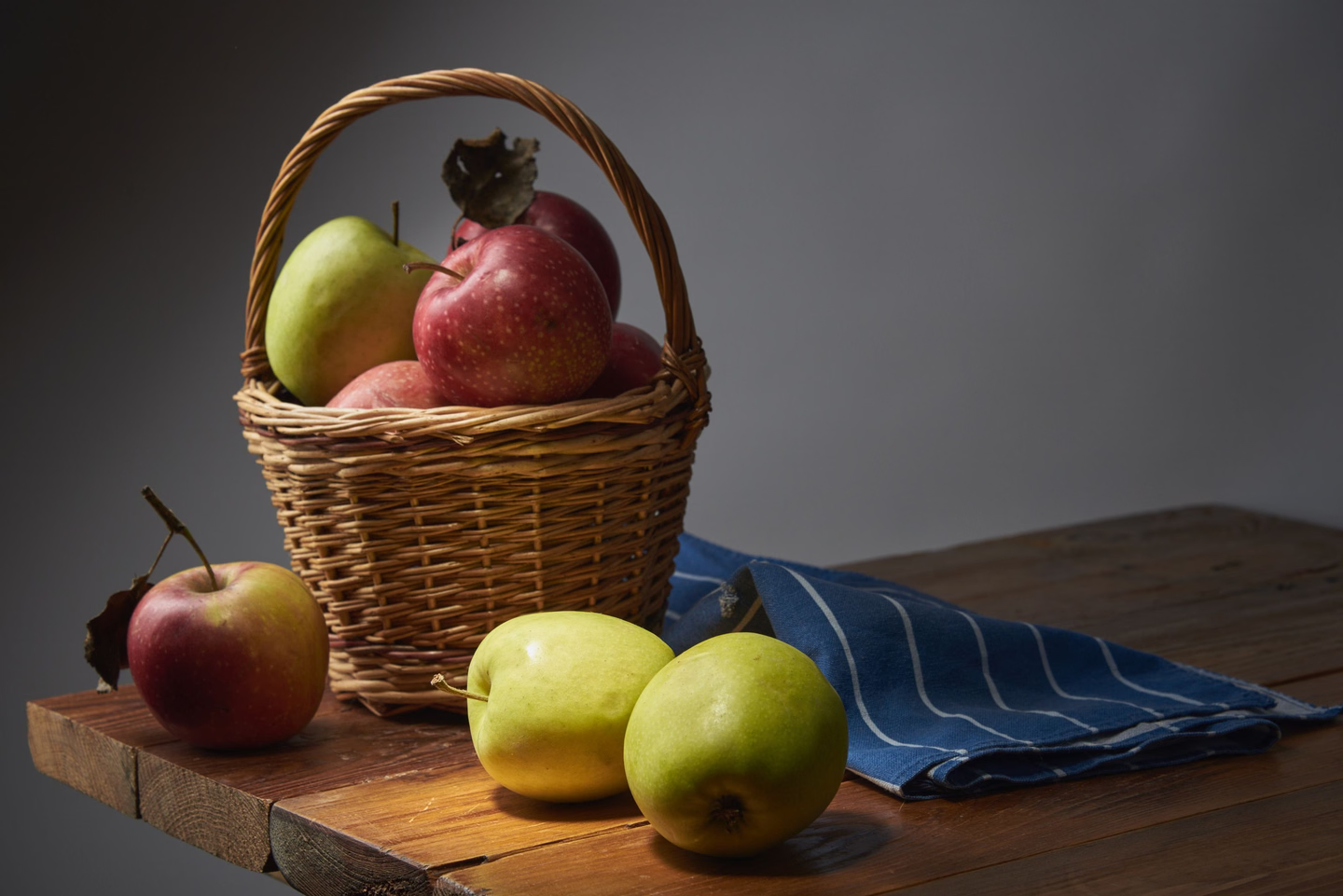
Build it only from fruit the goblins name in lines 1 to 31, and put a little card by each one with its line. Easy in October: apples, pears, grapes, pomegranates, figs, dates, oranges, lemons, melon, cranberries and blackberries. Harder to find, so don’t promise them: quinces, bullaces, greengages, damsons, bilberries, dewberries, barberries, citrons and mulberries. Set the platter in a tray of ice and swap it for a fresh one every two hours, per the FDA rules above.
Sweets and savory
- Candy-Coated Caramel Apples. ATK’s recipe makes 6 from six small apples, a 14-ounce bag of soft caramels and 1/4 cup of heavy cream, rolled in crushed Kit Kat, Twix or Heath bars. Two tips from ATK: “Freezing the caramels for 10 minutes will make it easier to remove their wrapping.” And: “Granny Smith or McIntosh apples provided a tart bite that cut through the richness of the caramel and candy.” Make two batches, and see the food safety section for how to hold them.
- Caramel Apple Hand Pies. ATK’s recipe serves 8 from two sheets of puff pastry, a Granny Smith cut into 1/2-inch pieces and ATK’s All-Purpose Caramel Sauce, which is made with “1 cup heavy cream”, baked at 400 degrees for 15 to 20 minutes. The make-ahead part is the freezer: “Once frozen, pies can be transferred to airtight container and stored in freezer for up to 1 month.” Double it, freeze them the week before, and bake at 8:00.
- Spiced Nuts. ATK’s recipe makes about 10 cups from 2 pounds of nuts, egg whites, sugar, cinnamon, ginger and coriander, and says “Do not use salted nuts.” ATK also says “The nuts can be stored at room temperature in an airtight container for up to 3 weeks.” That makes them the stall you set up the week before. Bag them in kraft bags, a handful each.
Our charcuterie board guide has savory boards if you want something that isn’t sweet.
The Bar
Two pots, two ladles
The Potion Stall has two pots of cider, each with its own ladle and its own card. The cider is pasteurized. The FDA’s required warning on untreated juice reads: “This product has not been pasteurized and therefore may contain harmful bacteria that can cause serious illness in children, the elderly, and persons with weakened immune systems” (FDA). Check the jug for the word “pasteurized.”
- No alcohol: ATK’s Hot Ginger-Spiced Mulled Cider serves 16 from a gallon of cider with oranges, a lemon, ginger, allspice, cloves, peppercorns and a cinnamon stick: “Bring all ingredients to boil in Dutch oven over medium-high heat. Reduce heat to low and steep for 30 minutes.” Then strain it and “keep warm over low heat.”
- With alcohol: ATK’s Brandied Mulled Cider makes 12 cocktails from 2 quarts of cider and 16 ounces of brandy, and says “Feel free to substitute bourbon or aged rum for the brandy.” ATK notes that “Kept covered in the saucepan, the mulled cider will stay warm for about 30 minutes,” so keep this one on a low burner or a slow cooker rather than off the heat.
Do the math before it goes out. NIAAA counts one standard drink as any drink that holds “about 14 grams, or about 0.6 fluid ounces, of pure alcohol”, which is 1.5 ounces of 40% spirits (NIAAA). Our arithmetic: 16 ounces of 80-proof brandy holds 6.4 ounces of alcohol, about 10.7 standard drinks, split across 12 mugs, so each mug is about 0.9 of a standard drink. A stronger spirit changes that; check the label. Tick ALCOHOL on one card and NO ALCOHOL on the other.
A third jug of pomegranate juice and sparkling water covers anyone who doesn’t want cider; pomegranates are in line 21. For more, see our cocktails and mocktails guide, and our Witch’s Apothecary for dressing the Potion Stall like a shop.
Costumes: Animals, Not People
Rossetti’s goblins are animals: a cat’s face, a whisking tail, a rat’s pace, a snail, a wombat, a ratel, a parrot. That’s the costume brief, and it’s the only one. Come as one of those, with an apron and a tray of fruit, and you’re a goblin merchant.

Bestac Black Cat Half Mask
A black cat-faced half mask with an adjustable strap. The listing's bullets say PU leather while its description just says leather, so it disagrees with itself; there's no fur on it. With a basket on one arm it's the cat-faced merchant.
There’s an owl in Rossetti’s frontispiece, though not in the poem’s list, if someone wants it.

Hosfairy Owl Half Mask, Brown
A single owl half-face mask. It has only 26 ratings, so order early enough to swap it if it doesn't fit.
No human goblins. Don’t give anyone a big nose, a hunched back, a bag of gold and a sly grin and call them a greedy merchant; that picture has a history. The ADL’s guide to antisemitic myths opens its chapter on greed: “One of the most prominent and persistent stereotypes about Jews is that they are greedy and avaricious,” and notes that “Jews were often made the villains in literature and art of the time, reflecting a widespread depiction of Jews as unscrupulous, money-hungry and working against the interest of the honest citizen” (ADL).
This is also a literary market, not a real one. No lanterns, signs, foods or clothes styled on any living night-market culture, and no “exotic bazaar.” The look is an English glen in a Victorian poem: baskets, cloth, hawthorn and fruit.
Other costumes that work:
- A stallholder. Apron, shawl, a basket of your own wares.
- A fairy-fair dealer. A flat cap, a stick and a loud voice, slapping hands on every bargain, from the Clonmellon story.
- Laura or Lizzie. A plain long dress and a golden curl of yarn at the wrist.
Our costume contest ideas work with a single category tonight: best merchant.
Production Notes
Budget Breakdown: Food for sixteen, two batches of caramel apples, a double batch of hand pies, the spiced nuts and the fruit platter, comes to about $130. Cider, brandy and the pomegranate spritzer add about $65. The fairy lights, lanterns, chalkboards and kraft bags are about $66, and cardstock, envelopes and purses about $40. That’s a floor of about $300. Baskets ($42), the gold yarn ($10), wood discs ($10) and two masks ($31) take it to about $395. Guests bring their own wares.
Advance Prep: Invitations three weeks out, with a line asking everyone to bring wares. The week before: make the spiced nuts, assemble and freeze the hand pies, print and cut the scrip and signs. The morning of: dip the apples and refrigerate them, wash and chill the fruit. Mull the cider at 6:30.
What to Skip: Real flame anywhere, incense included. Real money of any kind. Scissors near anyone’s hair. Stick-in caramel apples on a room-temperature table all night. Potted plants and garden soil at the swap. Any costume that makes a goblin a person rather than an animal, and any styling borrowed from a real night market. The poem’s middle, on signs or aloud.