Printable Halloween Card Pack
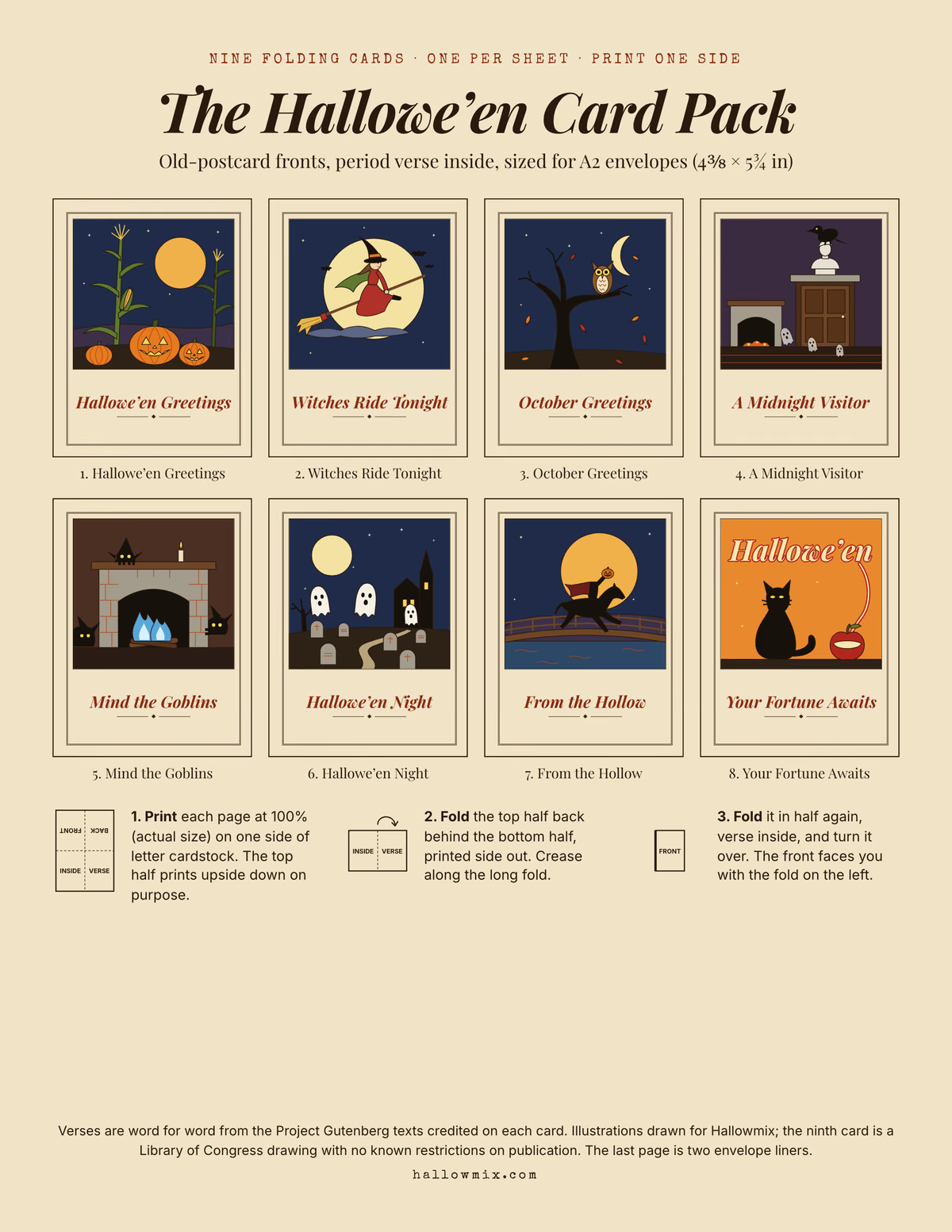
Nine folding Halloween cards in the style of 1910s postcards, with verse inside from Poe, Riley, Burns, Irving and Shakespeare. One card per letter sheet, printed on one side, folded to fit an A2 envelope. Envelope liners included.
Download Files
What You'll Need To Use This
-

LUXPaper A2 Invitation Envelopes, Peel & Press, 4 3/8 x 5 3/4 In, Midnight Black, 50 Qty
The folded cards drop straight in. Black makes the orange liner show when the flap opens.
$11.95 Price as of Sep 29, 2026
View on Amazon: LUXPaper A2 Invitation Envelopes, Peel & Press, 4 3/8 x 5 3/4 In, Midnight Black, 50 Qty -

A2 Envelopes, Orange, 4 3/8 x 5 3/4 In, Pack of 50
Orange for the other half of the stack. The listing gives a gummed square flap and a 4 1/4 x 5 1/2 in card fit.
$16.99 Price as of Sep 29, 2026
View on Amazon: A2 Envelopes, Orange, 4 3/8 x 5 3/4 In, Pack of 50 -

Astrobrights Specialty Parchment Cardstock, 8.5 x 11 In, 65 lb, Natural, 100 Sheets
Run the print-friendly file on this and the cards come out old-paper colored without the ink bill.
$15.19 Price as of Sep 29, 2026
View on Amazon: Astrobrights Specialty Parchment Cardstock, 8.5 x 11 In, 65 lb, Natural, 100 Sheets -

Astrobrights Mega Collection Cardstock, Bright Orange, 65 lb, 8.5 x 11 In, 320 Sheets
For the liner page and for black-ink cards on orange, the old postcard color scheme.
$19.06 Price as of Sep 29, 2026
View on Amazon: Astrobrights Mega Collection Cardstock, Bright Orange, 65 lb, 8.5 x 11 In, 320 Sheets -
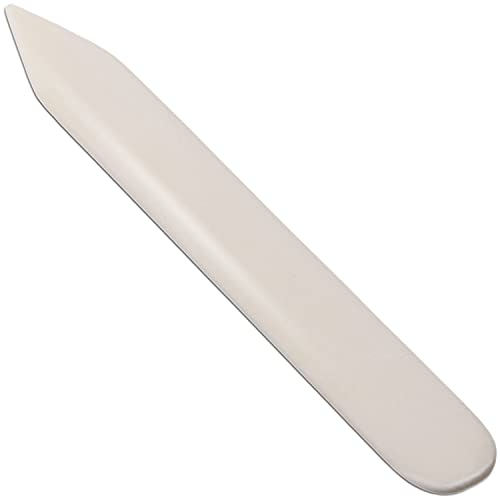
VENCINK Genuine Bone Folder, 6 In
Two layers of cardstock fight the second fold. Run this down both creases and the card closes flat.
$8.19 Price as of Sep 29, 2026
View on Amazon: VENCINK Genuine Bone Folder, 6 In -

Halloween Round Sticker Roll, 1.5 In, 500 Pieces
The listing describes 1.5 in round coated-paper stickers, so the flap is sealed with nothing raised to make the envelope lumpy.
$5.98 Price as of Sep 29, 2026
View on Amazon: Halloween Round Sticker Roll, 1.5 In, 500 Pieces
Halloween cards were a postcard business first. Lisa Morton counts “around 3,000 Halloween postcards produced” between about 1910 and 1925 (Halloween Postcard History #1), and this pack borrows their look: jack-o’-lanterns against the corn, a witch in red, “Hallowe’en” with the apostrophe. The fronts are drawn for Hallowmix, the greetings are ours, and inside each card is a few lines of period verse. If the old cards themselves are your thing, our guide to collecting vintage Halloween covers how to date them and spot reproductions.
What’s in the Pack
| Card | Front | Inside |
|---|---|---|
| 1 | Jack-o’-lanterns by a corn stalk, “Hallowe’en Greetings” | James Whitcomb Riley, “When the Frost is on the Punkin” |
| 2 | A witch in red riding across the moon, “Witches Ride Tonight” | Macbeth, Act IV, Scene I: “By the pricking of my thumbs” |
| 3 | An owl in a bare tree, “October Greetings” | Poe, “Ulalume” (1847): “It was night in the lonesome October” |
| 4 | A raven on a bust above a door, “A Midnight Visitor” | Poe, “The Raven” (1845): the dying ember line |
| 5 | Goblins round a blue-flamed hearth, “Mind the Goblins” | Riley, “Little Orphant Annie,” down to “Watch / Out!” |
| 6 | Ghosts in a churchyard, “Hallowe’en Night” | A Midsummer Night’s Dream, Act V: “Now it is the time of night” |
| 7 | The headless horseman on a bridge, “From the Hollow” | Irving, The Legend of Sleepy Hollow: the horseman “without a head” |
| 8 | A black cat and an apple whose peel curls up to the lettering, “Your Fortune Awaits” | Robert Burns, “Halloween” (1785): the opening four lines |
| 9 | Alfred Fredericks, “A Hallowe’en Vision” (1886) | Blank |
The last page is two envelope liners.
Every verse is copied word for word from its Project Gutenberg text, down to Riley’s dropped letters (“A-list’nin’”, “Gobble-uns”) and Poe’s “crispéd.” The back of each card names the Gutenberg eBook it came from. Card 1’s back also has the verse’s own postcard story: Morton found a 1909 card printed with Riley’s line, and at some point “the postcard company decided this card would sell better as a Halloween card and so (rather crudely) stamped ‘HALLOWEEN’ over the line of poetry” (Halloween Postcard History #7).
The witch follows the old cards, not the modern costume. Morton notes that “most of the witches shown on the early postcards are dressed in green or red” and that “none of them have green skin.” The three witches on the card she discusses wear tall hats that “sport stylish bands,” and ours has one too (Halloween Postcard History #9). Card 8 borrows the apple-peel fortune, where “the peeling was tossed back over one shoulder” to see what letter it made: the peel of the cat’s apple curls up to the word “Hallowe’en” (Halloween Postcard History #5).
Card 9 is a pen-and-ink drawing from Harper’s Young People, October 26, 1886, held by the Library of Congress, which lists it with “No known restrictions on publication.” Fairies watch two women walk a country path, a good match for Burns’s fairies on the Cassilis Downans in card 8.
Which File to Print
- Full-color PDF: the scenes in postcard color on a cream ground. Print it on white or parchment cardstock.
- Print-friendly PDF (
-print): black line art on white. Run it on orange cardstock for black-on-orange cards, or on parchment.
Skip black cardstock for the cards. A home printer lays down no white ink, so the art disappears into the paper.
Printing and Folding
Each card is one letter sheet printed on one side only, so there’s no duplex setting to get wrong. The top half comes out upside down. That’s correct: it’s the front and back cover, and the fold turns them right way up.
- Print at 100% or “Actual size,” not “Fit to page.” Scaling shrinks the panels and moves the folds off the tick marks.
- Fold the top half back, behind the bottom half, so the printed side stays out. Line the fold up with the small tick marks at the left and right edges.
- Fold in half again along the tick marks at the top and bottom, with the verse inside. Turn it over: the front faces you with the fold on the left, and the verse is on the right when you open it.
Run the first sheet on plain paper and check it before you load cardstock. Card 1 opens to Riley’s line on the right; if the verse is on the outside, the second fold went the wrong way. Two layers of 65 lb cardstock make a thick card, so crease both folds with a bone folder.
The inside left panel is blank for your message, and so is the space under the verse.
Envelopes and Postage
The folded card is 4.25 x 5.5 inches and fits an A2 envelope, which JAM Paper’s envelope size guide lists as “4 3/8 × 5 3/4 inches.” We like black A2 envelopes with the orange liner.
USPS lists a First-Class Forever stamp at $0.82, good for “1 oz (about 4 sheets of regular, 8-1/2” x 11” paper in a rectangular envelope)” (USPS), at prices effective July 12, 2026 (Notice 123). One folded card is a single sheet of cardstock, but cardstock is heavier than copy paper, so put a finished card in its envelope on a kitchen scale before you buy stamps for the whole stack.
Shape matters too. A letter is nonmachinable if it “has an aspect ratio (length divided by height) of less than 1.3 or more than 2.5,” or if the address runs parallel to the short side (DMM 101). An A2 envelope works out to 5.75 ÷ 4.375 = 1.31, just inside the line, so address it landscape. A square envelope fails the ratio, and USPS says of envelopes that are “rigid, lumpy or has clasps, string, or buttons” that “you’ll have to pay $0.49 more to send it,” adding that “you’ll also have to pay more if your envelopes are square or vertical (taller than they are wide)” (USPS).
USPS doesn’t name wax seals. Our reading is that a raised seal or a charm makes the envelope lumpy, so plan on the $0.49 or hand-deliver those. For the mail, seal the flap with a flat paper sticker.
Envelope Liners
The last page has two liners, 5.5 x 5.25 inches each, with bats, moons and stars. The full-color page prints black on orange. For less ink, print the -print page on orange cardstock.
- Cut on the dashed line.
- Slide the liner into the open envelope until it touches the bottom.
- Fold the envelope flap down over it and crease, then trace the flap’s shape on the liner and trim.
- Glue the liner along the flap only, so the card still slides in below it.
Pairs With
- Vintage Halloween Prints for framed public-domain art on the wall
- Witch Party Invitation if the card is inviting people over
- Secret Reaper Gift Tags for the gift the card goes with
- Halloween Invitation Etiquette for timing and what to write
Guides That Use This Printable

Accessible Trick-or-Treat: A Porch Every Kid Can Reach
Why the candy should come down to the walk instead of a ramp going up, what hangs where a white cane can't find it, how to light the path for low vision without strobing anyone, and how to run a teal bowl, a quiet hour and a sign kids can actually read.
How Much Halloween Candy to Buy (And the Bag-Count Trap)
Why the famous candy formula's per-bag number is wrong, how to count your trick-or-treaters this year so next year's estimate is real, the per-piece math on common bags, and what to do with the leftovers.
How to Host a Halloween Dinner Party That People Actually Talk About
A complete guide to throwing a Halloween dinner party for adults, from atmospheric lighting and sound design to menu planning and the arc of an unforgettable evening.