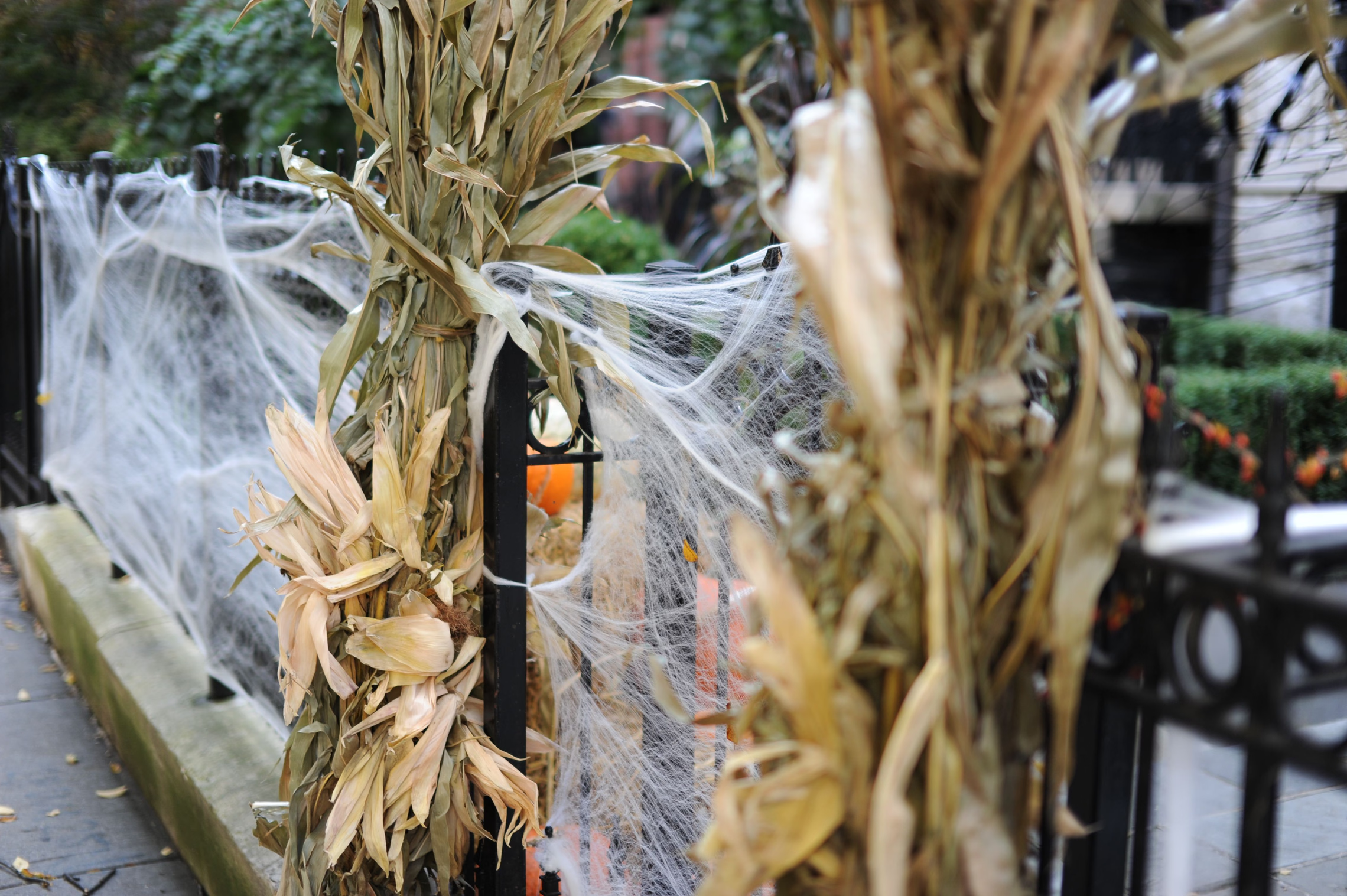
A pirate cove is a skeleton crew, the bow of a ship, a cannon, a chest of gold and a sea that isn’t there. It reads from the street at a glance, and it gives you more to build than most yard scenes: a facade, rigging, a smoking gun, lanterns and a waterline. It also brings more ways to get it wrong, from a fog machine stuffed inside a cardboard cannon to a real lantern flame next to plastic rope.
Where the Pirate Look Comes From
Most of what a yard pirate scene shows was invented or made famous by writers and illustrators long after the pirates were hanged.
The dates. Three approved sources give three different Golden Ages, and we’re not going to pick one:
- The Library of Congress says “The Golden Age of Piracy spanned the period from approximately 1650 to 1726” (Library of Congress).
- JSTOR Daily puts it “running from roughly 1650 to 1730” (JSTOR Daily).
- The Library of Congress’s annotation of Marcus Rediker’s Villains of All Nations describes “the ‘golden age of Atlantic piracy’ between 1716 and 1726 that featured the dreaded black flag, the Jolly Roger, Blackbeard, and the unnamed pegleg pirate who was likely the model for Long John Silver in Robert Louis Stevenson’s Treasure Island” (Library of Congress).
The LOC guide adds that “The characters from the Golden Age of Piracy and their exploits form the basis of the modern conception of pirates as depicted in popular culture.”
Walking the plank. History.com says “there is no proof that swashbucklers ever made their enemies and victims walk the plank,” and that “real pirates during the 17th and 18th centuries were fonder of equally unpleasant punishments such as flogging and marooning” (History.com). The seed is a 1724 story about ancient Mediterranean pirates and a Roman captive. In A General History of the Pyrates, they “hung out the Ladder of the Ship, and coming with a shew of Courtesy, told him, he had his Liberty, desiring him to walk out of the Ship, and this in the Middle of the Sea” (Project Gutenberg). History.com credits the book to Daniel Defoe; Project Gutenberg’s record names Charles Johnson and lists Defoe as a “Dubious author.”
From there, History.com traces the plank through Charles Ellms’s The Pirate’s Own Book (1837), Stevenson and Howard Pyle. In Treasure Island, Billy Bones’s “Dreadful stories” are “about hanging, and walking the plank, and storms at sea” (Project Gutenberg).
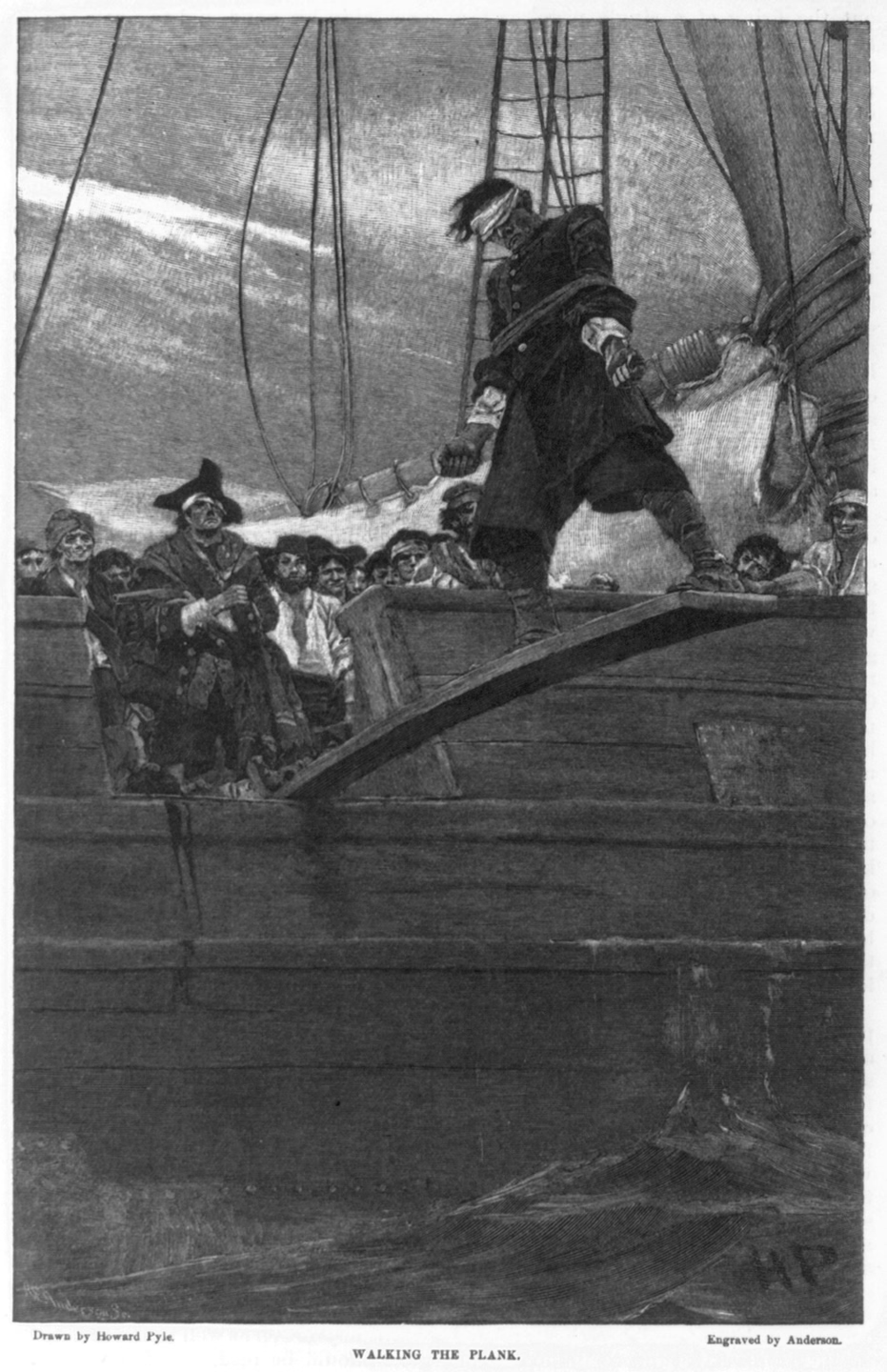
Where Pyle’s picture first ran is itself unsettled. History.com says it was made “for a Harpers Weekly article.” The Library of Congress catalog record for the engraving says “Illus. in: Harper’s New Monthly, 1887, p. 511,” and warns that “This record contains unverified, old data from caption card” (Library of Congress).
Buried treasure. History.com: “there are only a few reliable accounts of buccaneers actually burying their loot.” Captain Kidd did bury gold and jewels on Gardiners Island in 1699, and “the authorities tracked down and confiscated most of the ill-gotten treasure.” The same article says “the concept of buried plunder was popularized by author Robert Louis Stevenson’s 1883 novel ‘Treasure Island’” (History.com), while its plank article calls the book “Stevenson’s 1884 masterpiece.” We didn’t find an approved source to settle the year.
Stevenson’s map doesn’t use an X. It has “three crosses of red ink,” and beside the last, “in the same red ink, and in a small, neat hand, very different from the captain’s tottery characters, these words: ‘Bulk of treasure here.’” That’s the line to letter on a prop map.
Parrots, peg legs and eye patches. The parrot and the missing leg are Long John Silver’s. “His left leg was cut off close by the hip, and under the left shoulder he carried a crutch,” and his parrot, Captain Flint, “would say, with great rapidity, ‘Pieces of eight! Pieces of eight! Pieces of eight!’” The eye patch isn’t in Treasure Island: we searched the full text and it doesn’t appear. We haven’t found an approved source for where it comes from, so treat it as costume, not history.
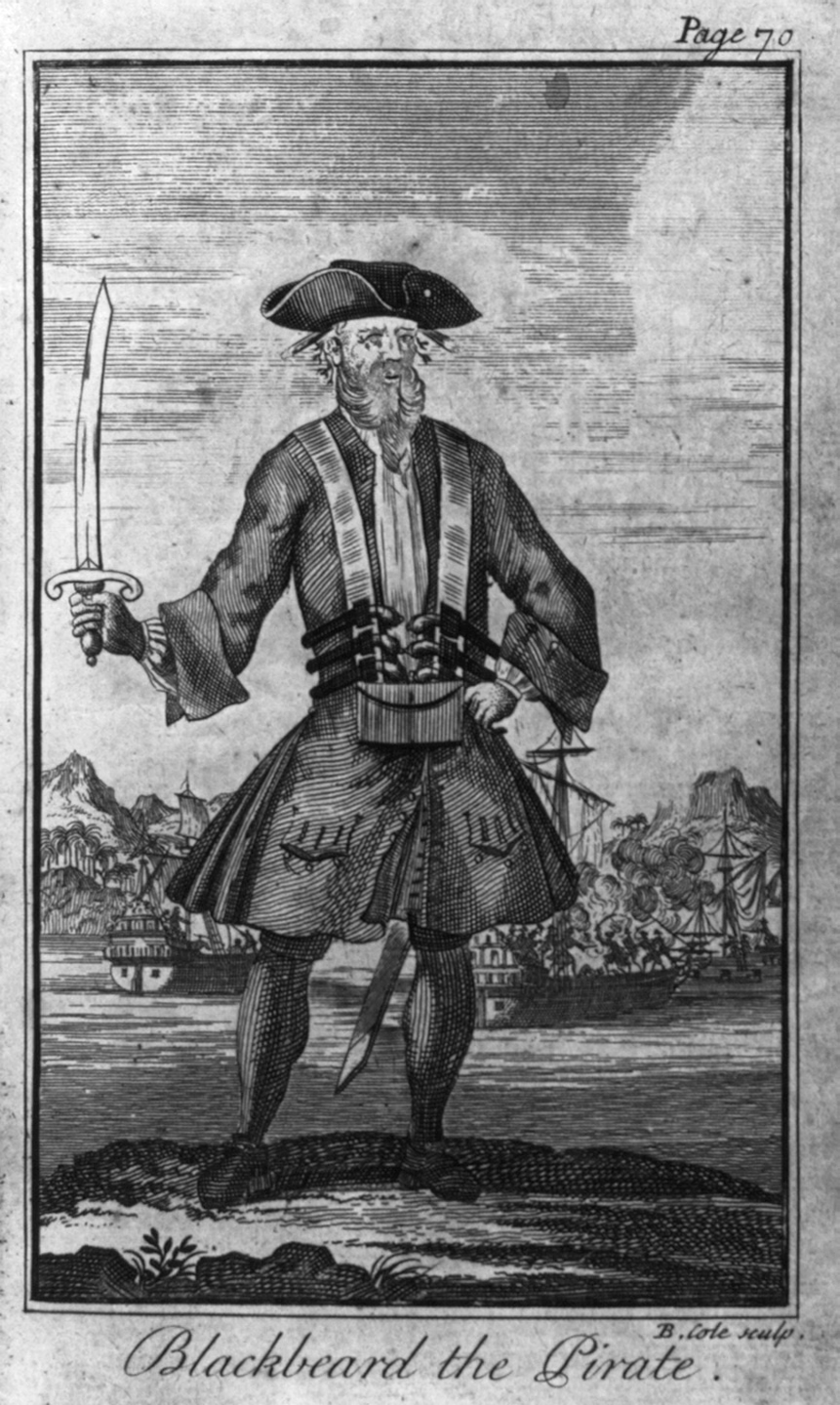
Blackbeard. The Queen Anne’s Revenge project, run by North Carolina’s Department of Natural and Cultural Resources, says “Even his true name is uncertain, though it is usually given as some variation of Edward Thatch or Teach” (QAR Project). His flagship was a slave ship first. “Prior to its capture by pirates, the ship was called La Concorde and was used to transport 1,265 African men, women, and children from West Africa to the New World to be sold into slavery” (QAR Project). According to the project’s Blackbeard history, the ship ran aground in June 1718 at Old Topsail Inlet, now Beaufort Inlet, North Carolina.
That history belongs on a sign or in your own telling, not in the props. For the figure itself, the 1724 General History describes the look: “he wore a Sling over his Shoulders, with three brace of Pistols, hanging in Holsters like Bandaliers; and stuck lighted Matches under his Hat.” Your version gets battery LED “matches,” not real ones. We found no approved source for a Blackbeard flag design, so a skull-and-crossbones flag in the yard is generic pirate, not his.
Pick Your Crew: Store Ship or Skeleton Crew
Home Depot’s Dead Water collection is the ready-made pirate scene. Prices and ratings from homedepot.com, checked September 30, 2026:
| Piece | Model | Price |
|---|---|---|
| 9.5 ft Dead Water Giant-Sized Animated LED Pirate Ship | 25PA04180 | $399 |
| 2-Piece Dead Water Animated LED Pirate Duo | 26PA05442 | $199 |
| 6.5 ft Dead Water Animated LED Fisherman in Rocking Chair | 25PA04070 | $199 |
| 6 ft Dead Water Animated LED Zombie Pirate | 25SV24830 | $179 |
| 5 ft Dead Water Animated LED Rotwing Parrot (new for 2026) | 26SV25390 | $179 |
We read two of those manuals in full: the ship and the parrot.
What the pirate ship’s manual says
The Dead Water Pirate Ship manual is from Pan Asian Creations, and it’s stricter than the prop’s name suggests:
- Not near water. “Do not use near water; such as a bathtub, laundry tub, kitchen sink, wet basement or swimming pool, etc.” and “Do not install or use within 10 feet of a pool.” A ship called Dead Water can’t sit next to a real pond, a ripple tub or a mist-maker sea.
- No extension cord. “Do not use an extension cord.” Outdoors, “install only to a covered Class A GFCI protected receptacle that is weatherproof with the power unit connected to the receptacle,” and it rules out receptacles “that are weatherproof only when the receptacle is covered.” That means an in-use (bubble) cover like the Intermatic WP5100C, and a ship placed within reach of that outlet.
- Height. The power-unit instructions say “Mount the unit at a height greater than 1 foot from the ground surface.” The ship itself is ground-staked, so this reads as the power unit, but the manual doesn’t spell it out. If you’re unsure, ask Home Accents Holiday at 1-855-434-6543.
- Don’t climb the rigging. “DO NOT STEP OR CLIMB ON ROPE LADDERS.” Don’t hang props, lights or a flag from the ladders or mast either. Tie the two tethers to the ground stakes as step 24 says, “for additional Mast stability.”
- Heat. “Do not display the product near any heat source such as radiators, stoves, fireplaces, etc.”
- Power. The skeleton at the wheel takes 3 AA batteries (included) and runs its eyes on a timer, “ON for 6 Hours & shut OFF for 18 Hours.” The wheel turns on “the UL Listed AC 12V, 830MA Adapter.”
If the wheel starts clicking, the manual says “(Item is not damaged)”: put the pirate’s hands back on the wheel and “Give the Ships Wheel a half-turn to set it back on its track.” Our animatronic repair guide has more on the ship and its sister props.
The Rotwing Parrot is an indoor bird
Home Depot lists the parrot with an “interactive voice system - 20 phrases” and says you can “Ask yes or no questions to get your own unique response” (Home Depot). Its manual, from Seasonal Visions International, lists the adapter as “Adapter * Indoor” and says “For best performance operate your item indoors.” It also says to “Keep flammables away from the adapter, as it heats up during operation,” and to store it “away from heat and moisture.” It warns that the parrot “should not be grabbed, as it becomes a tipping hazard.” That makes it an indoor bird: stand it inside a front window or an entryway that looks out on the scene, so it reads as part of the cove from the street without spending the night outside. Its IR sensor reaches “up to 4m/13 ft,” so an entryway parrot still answers anyone who comes to the door.
A skeleton crew
A few dressed skeletons make a crew for much less than one animatronic, and the posable ones can stand in weather the parrot can’t. Give each one a job: one at the wheel or the bow, one on the chest, one hauling a rope, one slumped against the cannon. Our skeleton posing guide covers locking joints with UV-rated zip ties and anchoring to fences and chairs.
A marooned skeleton on its own in the grass is a scene by itself. Howard Pyle wrote that a passing crew “might perhaps find a few chalky bones bleaching upon the white sand in the garish glare of the sunlight, but that was all” (Project Gutenberg).

5.4 ft Life-Size Pirate Skeleton, Posable
A plastic skeleton that comes dressed in pirate clothes, hat and eye patch, with a movable jaw, shoulders, elbows, wrists, hips, knees and ankles. The head, torso and legs come apart and plug together. It's listed for indoor and outdoor use; stake it and zip-tie the joints before it goes on the lawn.

JOYIN Animatronic Pirate Skeleton Captain
A 6-foot sound-activated captain in a tattered coat and pirate hat that sways, glows and talks when it hears footsteps or voices. It runs on 3 AA batteries (not included), so there's no cord to run. The listing suggests an entryway, living room or covered porch, so give it the dry spot and let the posable crew take the lawn.
Building a Ship’s Bow or Wreck Facade
Without a store ship, a flat facade does the job from the street. This is our method, not a maker’s:
- Material. Two-inch XPS foam board or exterior plywood, cut into the profile of a bow, a stern with windows, or the ribs of a wreck. XPS carves and weathers well; our graveyard guide covers why XPS rather than white beadboard, and Owens Corning’s rule that “Paint and glue need to be solvent free.”
- Paint. Latex house paint only on foam, dry-brushed with a lighter brown and gray to pick out plank edges. Our foam paint section explains why spray paint melts it.
- Frame. A 2x4 or PVC back frame screwed or glued to the panel, with diagonal braces running back to stakes. Our PVC frames masterclass covers pipe sizes and staking.
- The lean. A wreck looks like a wreck when it isn’t square to the lawn. Tilt the bow up 10 to 15 degrees and set the stern low, as if the hull settled on a sandbar. Brace the high end twice.
- Aged rope and netting go on last, zip-tied to the frame, never to the paint.
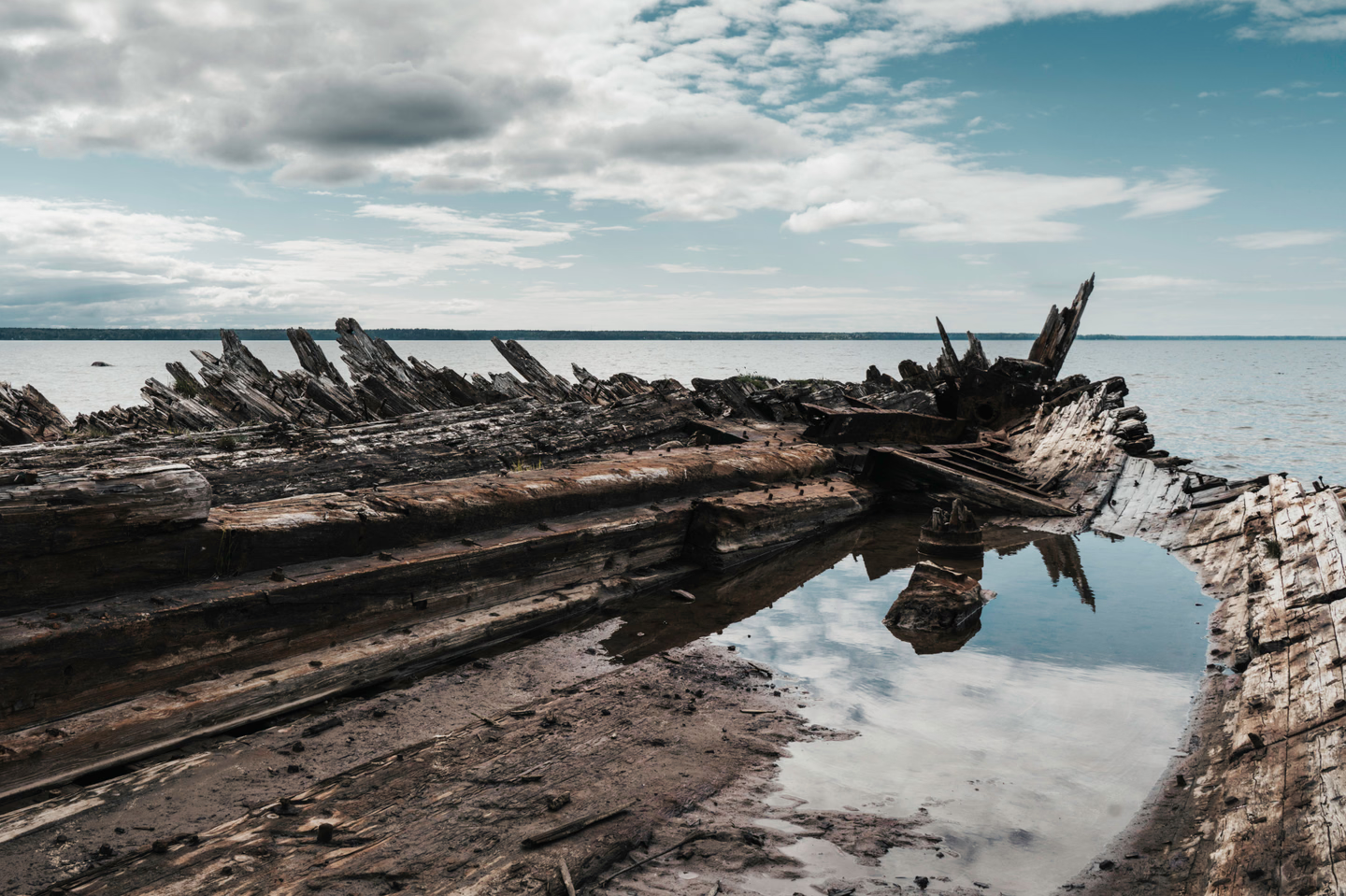
A facade is a sail. A 6-by-8-foot panel catches as much wind as a tarp. No maker gives a wind rating for a homemade facade, so brace it against the direction your storms come from, and lay it down when a Wind Advisory goes out. The National Weather Service’s advisory text says “Objects that are outdoors should be secured” (NWS), and our skeleton guide’s wind section has its description of what each wind speed does.
Owens Corning labels XPS combustible and gives a 165°F maximum service temperature (see our graveyard guide’s foam and lighting sections), so light a foam facade with LED fixtures only, and keep halogen floods off it.
Cannons and Cannon Smoke
One cannon undersells it. The QAR project says “Historical accounts refer to as many as 40 cannon on the ship. As of 2015, 30 have been found on the site, and 24 have been recovered by archaeologists” (QAR Project). Two or three barrels poking through gun ports in a facade look like a broadside; a single cannon on the lawn looks like a park monument.
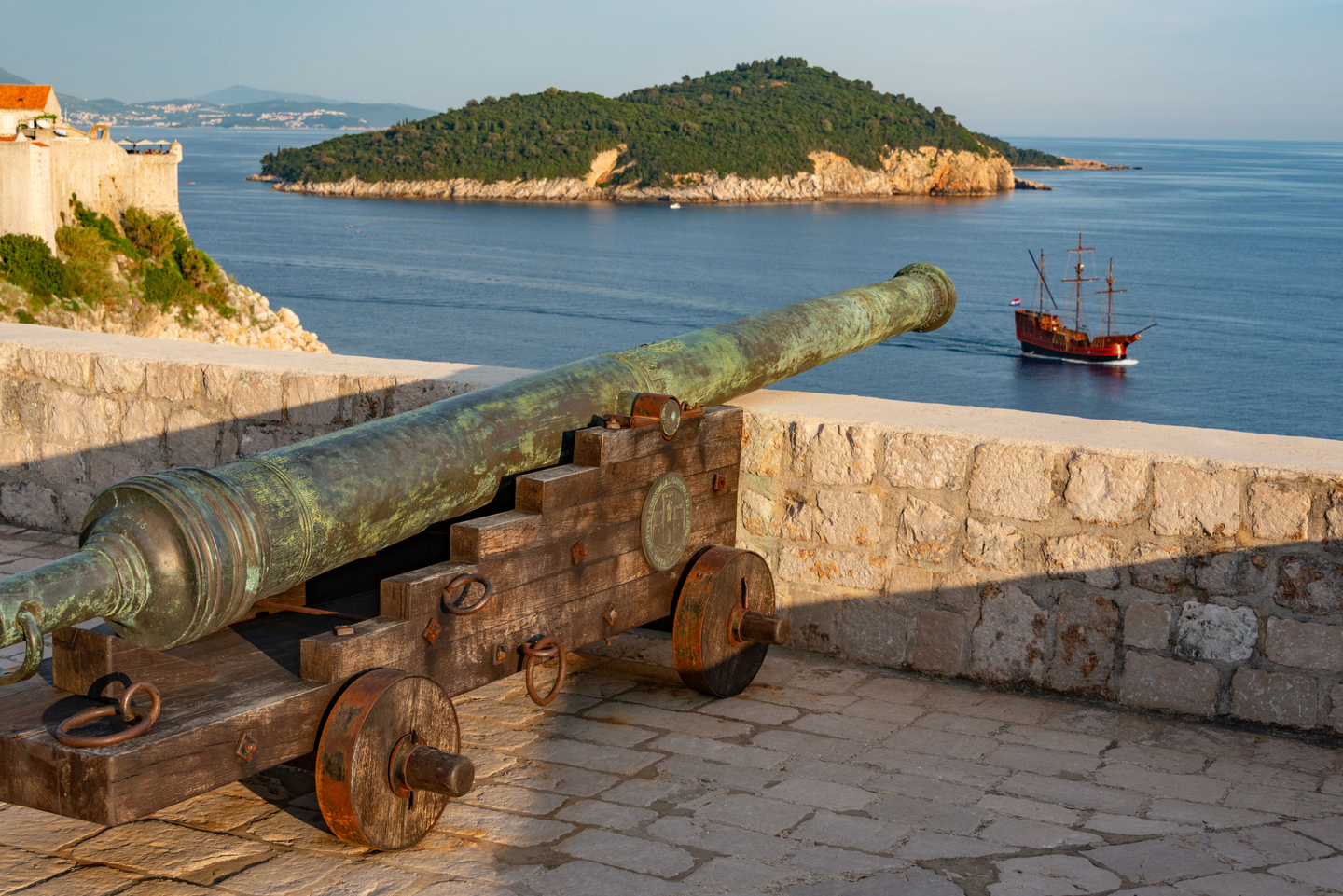
We didn’t find a reasonably priced cannon prop worth recommending, so this is a build (our method):
- Barrel. A cardboard concrete-form tube or a length of large PVC, capped at the back with a foam or wooden ball, painted flat black and dry-brushed with bronze-green or rust.
- Carriage. A plywood box with two plywood wheels per side, set low.
- Smoke. A dryer-vent hose from a fog machine, run in through the back of the barrel so fog drifts out of the muzzle. Use aluminum dryer duct where the hose meets the machine’s nozzle, not plastic flex hose. That’s our method: the nozzle gets hot enough to soften plastic, and neither manual below names a hose.
The fog machine never goes inside the cannon. Chauvet’s Hurricane 1000 manual says to “Mount in a location with at least 20 in (50 cm) of ventilation,” and lists among its DO NOTs: “Allow flammable materials close to the product when it is operating,” “Block any ventilation holes/slots in the housing,” “Set this product on a flammable surface,” and “Touch the output nozzle. It may be hot for several hours after use.” A cardboard, foam or fabric cannon wrapped around the machine breaks all four. Put the machine beside or behind the carriage with its clearance, and let the hose carry the fog.
The Hurricane 1000’s list also includes “Use outdoors” and “Expose to rain or moisture,” so that machine belongs in a garage or inside a window blowing out, not in the yard. For a machine in the yard itself, Antari’s IP-1500 manual says it “is particularly designed for outdoor applications” but is “spray-waterproof only.” The same manual says “The output nozzle becomes very hot during operation (about 200° C),” to “leave about 50 cm of space around the machine,” that it “must be installed out of the reach of children,” and “Never leave the unit running unattended.” So an outdoor machine still sits behind the cannon and away from the path, with an adult watching while it runs. Our outdoor fog techniques masterclass covers placement and wind. Chauvet also warns “All fog machines may set off smoke detectors,” which matters if the cannon fires from a porch.
To make fog hug the ground around the gun instead of rising, run it through a fog chiller before the barrel.
Rope, Netting and Rigging
Rope is where the scene looks nautical up close, and rope is fuel.
Ravenox, a US rope maker, says “Manila is naturally heat resistant and is used to make traditional fire service ropes,” and that “Polypropylene is preferred for low cost and lightweight, but it has limited resistance to ultraviolet light, is susceptible to friction and weak heat resistance” (Ravenox). On fire-resistant treatments it adds: “A treatment or test result applies to specific conditions and does not mean a rope cannot burn.” And not every tan rope is manila: Ravenox says its tan UnManila “is a polypropylene alternative to natural Manila rope,” so read the fiber on the label before a month of October sun.
How we’d use it:
- Real manila for anything that shows. Coil it on the deck, drape it from the bow, tie off a cannon.
- Aging. A soak in strong tea or coffee darkens new manila from blond to brown. Let it dry fully before it goes out.
- Netting. Drape it over the facade and zip-tie it to the frame with UV-rated ties. A cotton net burns too, so it stays clear of every lamp and adapter.
- Nothing hangs from a store prop’s rigging. Don’t load the Dead Water ship’s ladders or mast with props.

T.W. Evans Cordage 1/2-Inch Manila Rope, 50 ft
Half-inch natural manila, the traditional fiber that polypropylene decorating rope imitates. Fifty feet is enough to rig a bow and coil a pile on deck. It's decoration here, not a climbing or load line, and it burns like any plant fiber, so keep it away from lamps.

iHansee Brown Cotton Fish Net Decoration, 80 x 40 in, 2 Pack
Two brown nets from iHansee, an Amazon-only brand. The listing claims they're handwoven from 100% cotton rope 3 mm thick, which drapes heavier than thin string nets. Zip-tie them to the facade frame, and keep them clear of lanterns and adapters.

ANCONINE Double-Sided Skull and Bones Flag, 3 x 5 ft
A three-layer polyester skull-and-crossbones flag with brass grommets, readable from both sides. Fly it from its own pole staked behind the facade, not from a store ship's mast or rope ladders.
Treasure Chest and Lanterns: LED Only
Every lantern and flame-look light in a pirate cove is battery LED. Rope, cotton netting, a fabric sail and a foam facade all sit within a few feet of the lanterns. NFPA’s Halloween tip sheet says to “Keep all decorations away from open flames and other heat sources like light bulbs and heaters” (NFPA). Our fake fire guide explains why retardant sprays don’t make fabric safe outdoors, and its torches and cauldrons section covers flame-look lights.
The chest. Fill a wooden chest most of the way with crumpled black plastic, lay battery puck lights face up on top, and pour plastic coins and gems over them so the gold glows from underneath. Prop the lid open with a dowel, and set a skeleton hand on the rim. Give the chest a letter burned on the lid: Billy Bones’s sea-chest had “the initial ‘B’ burned on the top of it with a hot iron.” A small wood-burning tool does it; don’t use a torch.
The lanterns. Hang them from a stake or shepherd’s hook at the bow and along the path, so they light the crew’s faces from below.

Nautical Cove Wooden Treasure Chest with Lock and Key, X-Large
A 17 x 10 x 7.5 inch chest in teak and mango wood with iron straps, a hasp, a lock and skeleton keys. Big enough to read as treasure from the sidewalk. It's furniture-grade wood, so bring it onto the porch when rain is forecast.

Gejoy Pirate Treasure Coins and Gems, 430 Pieces
130 plastic gold coins with embossed skulls and 300 plastic gems. Pour them over puck lights in the chest so the gold glows from below.
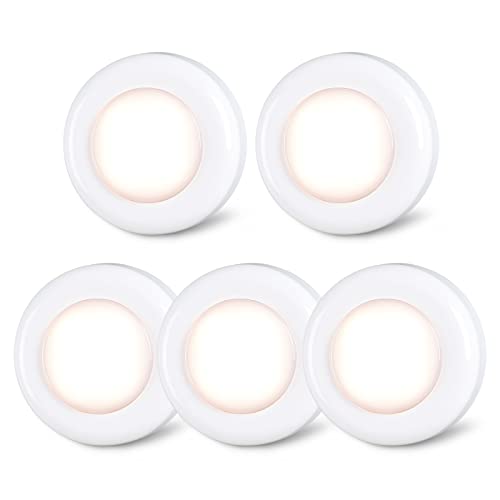
STAR-SPANGLED LED Puck Lights, AAA Battery, 5 Pack, Warm
Push-on warm LED pucks that each take 3 AAA batteries. They're made for cabinets, not weather, so they belong inside a chest you bring in when it rains.

YAKii LED Flame Lantern, Metal, Battery Operated
A black metal oil-lamp-shaped lantern with a flickering LED flame behind frosted glass, on 4 AA batteries (not included). The listing says to bring it indoors in extreme weather to keep the glass from breaking, and to “Keep away from direct rain and water exposure,” so hang it under cover or take it in when rain is forecast.
The Sea: Blue Light, Ripple Projectors and Low Fog
The water is the part you fake with light, because the Dead Water manual bans the real thing near its ship, and because a real pond or tub at a trick-or-treat path is a hazard of its own.
Blue uplight on the hull. Deep blue or cyan from low fixtures in front of the bow, with warm lantern light above, gives you a night sea below and a ship above. Our color theory masterclass covers why the contrast works, and outdoor lighting techniques covers the IP ratings to look for on anything that stays out.
A ripple projector aimed at a fence, a garage door or the bottom of the facade throws moving wave light. The pro DJ water-effect fixtures we looked at carry no outdoor rating, so the options are consumer projectors, and most of those come from Amazon-only brands, which means every rating is the seller’s claim. Read the whole listing: the one below claims IP65 for the light and IP44 for the power supply. On voltage, its description says “Voltage:100-240V 50-60Hz” with an “Adapter:5V 1.2A,” while its spec table says “220 volts.” Check the adapter’s own label. IP44 is splash-resistant, not rainproof, so the adapter goes under cover or inside the in-use cover.

KOOT Water Wave Projector, Outdoor, RGBW
Ripple-light projector with 10 colors, remote, and 3- and 8-hour timers. The listing claims IP65 for the light and IP44 for the power supply, and says it covers 500 square feet from 22 feet, best from 5 to 15 feet away. The description gives 100-240V with a 5V 1.2A adapter while the spec table says 220 volts, so read the adapter label, and keep the adapter covered.
Low fog as the waterline. Chilled fog pooling around the bow at ankle height makes a sea without any water. The fog chiller build and an outdoor-rated machine do it.
A laser waterline. A line laser skimming the top of that fog layer makes a flat glowing surface. Our laser swamp section has the recipe and the limits: rope it off, keep it out of eye level and never across a path. The line laser we cover there, the HoneyFair swamp laser, is green and listed as Class II. A blue laser sea is a different product, so check its class on the label before it goes near guests.
Projected pirates. AtmosFX sells Bone Chillers: Pirates for $55, with “rousing sea shanties, sword fights, and comedic chaos” (AtmosFX), and Ghost Pirate for $29, with scenes including “Davy Jones’ Locker” and “The Storm” (AtmosFX). Projected onto the facade’s sail or a garage door, they add movement to a static crew. Our projection guide covers what the license allows, and hiding the projector covers keeping it dry.
Weatherproofing and Wind
A month outside does the same things to a pirate cove it does to any yard scene, with more fabric and rope to fade.
- Sun. Polypropylene rope and printed flags fade and weaken. Turn or swap them mid-month.
- Rain. The puck lights, lanterns, wooden chest and ship’s wheel decor come in (the parrot lives indoors already). The posable skeletons and a painted facade can stay out.
- Wind. Lay the facade and the flagpole down, and bring the store animatronics in, when a Wind Advisory is issued. Our weatherproofing guide covers stakes and power connections.
- Power. Everything plugged in runs from a GFCI-protected outlet, and the Dead Water ship gets its own outlet with no cord in between.

Nagina International Handcrafted Wooden Ship Wheel, 24 in
A 24-inch dark rosewood-finish wooden wheel, spoke to spoke, sold as wall decor. The listing marks it for indoor use, so mount it on the porch wall behind the scene or bring it in before rain, not out on the lawn.
Sound: Shanties, and Why They’re Not Pirate Songs
A shanty soundtrack sounds right, and it’s more than a century late. R. R. Terry, in The Shanty Book (1921), wrote that “Shanties were labour songs sung by sailors of the merchant service only while at work, and never by way of recreation,” and that, at least in the nineteenth century, “they were never used aboard men-o’-war.” He also dates their end: “By the end of the seventies steam had driven the sailing ship from the seas” (Project Gutenberg).
Terry’s texts are public domain in the US. Recordings of them are not, and we found no rights statement that clears the Library of Congress’s field recordings for playing in a yard. Listen to those through the Library of Congress’s sea songs guide; for your speaker, sing them yourself or use a recording you have the right to play.
For a sign by the wreck, “Stormalong John” suits a dead crew:
Oh poor old Stormy’s dead and gone.
Storm along boys,
Storm along.
and its second verse, “I dug his grave with a silver spade.” Check any other shanty before you print it. Terry says he had to “camouflage many unprintable expressions,” and some of his texts still carry racial slurs, including “Johnny come down to Hilo,” “The Hog’s-eye Man” and “Blow my bully boys.” Don’t put those on a sign or a speaker.
Or use the verse Stevenson made famous, which Billy Bones sings: “Fifteen men on the dead man’s chest,” then “Yo-ho-ho, and a bottle of rum!”
Our Sound Mixer has a Ghost Ship preset (wind, chains, creaking, a bell, rain and whispers) to run under the scene. It has no surf or wave loop, so the sea stays visual. The sound design masterclass covers speaker placement, and our neighbors and HOA guide covers how loud is too loud.
Frequently Asked Questions
Did pirates really make people walk the plank? History.com says there’s no proof they did. The idea grew from a 1724 story about ancient pirates and a ship’s ladder, then Ellms in 1837, Stevenson, and Howard Pyle’s 1887 engraving.
Did pirates bury treasure? Rarely. Captain Kidd buried treasure on Gardiners Island in 1699, and the authorities recovered most of it. The buried-treasure story is mostly Treasure Island, where the map marks it with red crosses, not an X.
Can the Dead Water pirate ship stay out all October? Its manual says “For indoor and outdoor use,” but it also forbids an extension cord, use near water or within 10 feet of a pool, and outlets that are only weatherproof when closed. Stake and tether it, keep it on its own in-use-covered GFCI outlet. Keep the Rotwing Parrot indoors, since its manual says to operate it there and lists an indoor adapter.
Can I use a real oil lantern or torches? No. Rope, netting, sails and foam are all fuel, and fire-retardant sprays wash out in rain. Use battery LED lanterns and puck lights.
Can I hide the fog machine inside the cannon? No. Chauvet’s manual requires 20 inches of ventilation and warns the nozzle “may be hot for several hours after use.” Keep the machine outside the prop and duct the fog in with a hose.
Related Resources
For another staged yard scene, see our witch coven yard scene, and for the store props that anchor scenes like this one, the 2026 store animatronics guide and our best Halloween animatronics roundup. The front yard graveyard guide covers the foam carving and painting a wreck facade shares with tombstones.